

La Toneta de Mataró — The Daughter of the Robafaves Family | History
La Toneta de Mataró — The Daughter of the Robafaves Family | History
La Toneta is the youngest daughter of the Robafaves family and the only member whose origin date is known with near certainty: 1853. She is one of the first female giants born of a giant couple in Catalonia. This giant is called gegantona or gegantoneta (little giantess), and from this diminutive comes her current name: Toneta.
By 1957, la Toneta already appears with long blonde hair that gives her the young and modern look everyone knows. She wears pink and lilac tones and, like her mother, carries a bouquet of natural flowers in her right hand, while her left hand holds her skirt.
History of La Toneta
The construction of the current Toneta was commissioned to Josep Maria Diamant i Montañés in 1964, who created new volumes in polyester to reduce weight and improve resistance.
In 1984 the Mataró City Council declared the Giants part of the city's public heritage. La Toneta passed through the workshop of Solsona-born Manel Casserres, who kept the metal structures but completely remodelled the appearance, returning to cardboard for the head and hands. A new costume was also made by Llorenç Illa, although in 1992 Manel Casserres renewed the costume again.
In 2014 the Mataró City Council renewed la Toneta's costume under the direction of Manuel Casserres, opting for a continuist style with no major changes.
The dances of La Toneta
La Toneta dances to the sound of flabiolaires in the cercaviles and dormides, perpetuating the city's tradition. At the Dormida, she dances with Maneló to El Xotis d'en Borina, from the repertoire of flabiolaire Quirze Perich. She then dances together with Robafaves, la Geganta and Maneló to El Ball de Quatre by Carles Arabia. All these dances are choreographed by Montserrat Calsapeu.
Les Santes events featuring La Toneta
La Toneta takes part in most events of Les Santes de Mataró, Mataró's Festival: la Crida, el Desvetllament Bellugós, l'Anada a Ofici, la Passada, l'Anada a la Residència Sant Josep, el No n'hi ha prou and l'Anem a tancar. She also appears on Sant Jordi's Day.
Frequently asked questions about La Toneta de Mataró
Who is La Toneta de Mataró?
She is the youngest daughter of the Robafaves family, documented since 1853. One of the first female giants born of a giant couple in Catalonia. She has long blonde hair, wears pink and lilac tones and carries a bouquet of natural flowers.
Why is she called Toneta?
Because she is a gegantona or gegantoneta (little giantess), and from this diminutive comes the name Toneta.
When was the current Toneta built?
In 1964, by Josep Maria Diamant i Montañés. She was reformed in 1984 by Manel Casserres and her costume renewed in 2014.
When does La Toneta appear?
Mainly during Les Santes (25-29 July) and on Sant Jordi's Day (23 April). During Les Santes she takes part in almost every event of the institutional procession.
What dances does La Toneta perform?
At the Dormida she dances El Xotis d'en Borina with Maneló, and El Ball de Quatre with the whole Robafaves family. All dances are choreographed by Montserrat Calsapeu.
Where can I buy La Toneta de Mataró products?
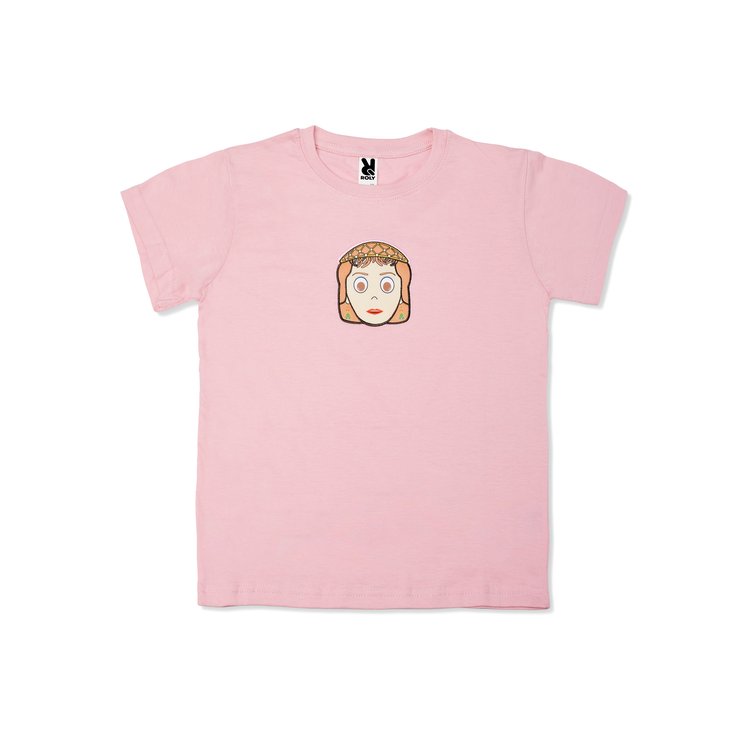
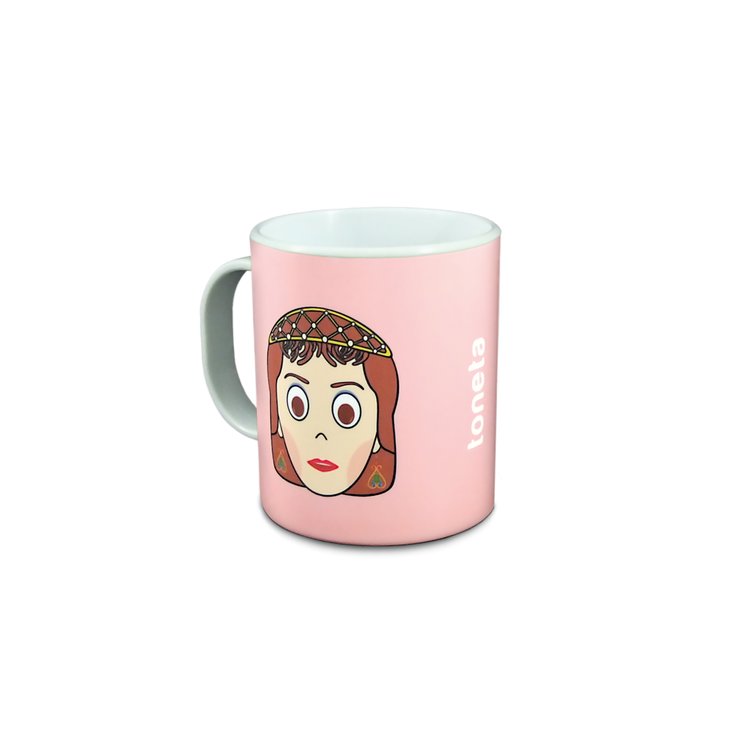
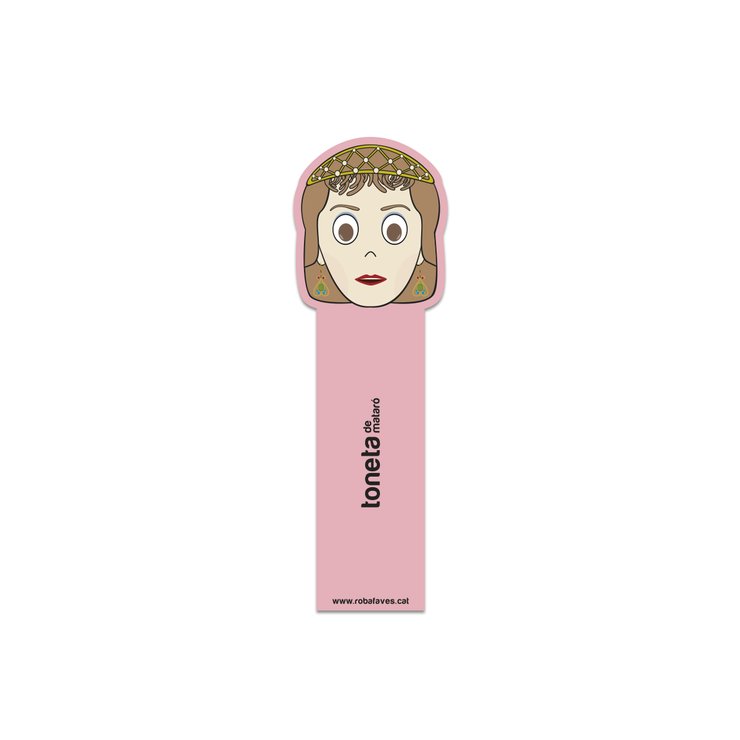
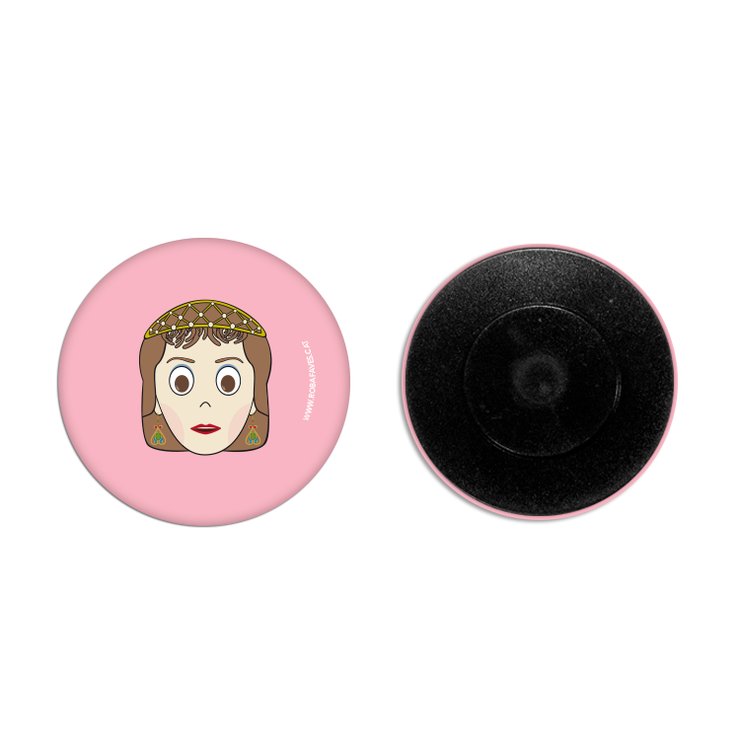
At Robafaves, at Carrer Montserrat 7 in Mataró and in the online shop. T-shirts, mugs, magnets and much more featuring La Toneta hand-embroidered.